Preventica Bordeaux: the benchmark event for occupational risk prevention
Every year, the Preventica trade show brings together in Bordeaux the leading players in workplace safety, operator health, and occupational risk prevention in France. The show gathers more than 15,000 professional visitors and 600 exhibitors from every industrial sector. Its innovation award is presented at the opening ceremony.
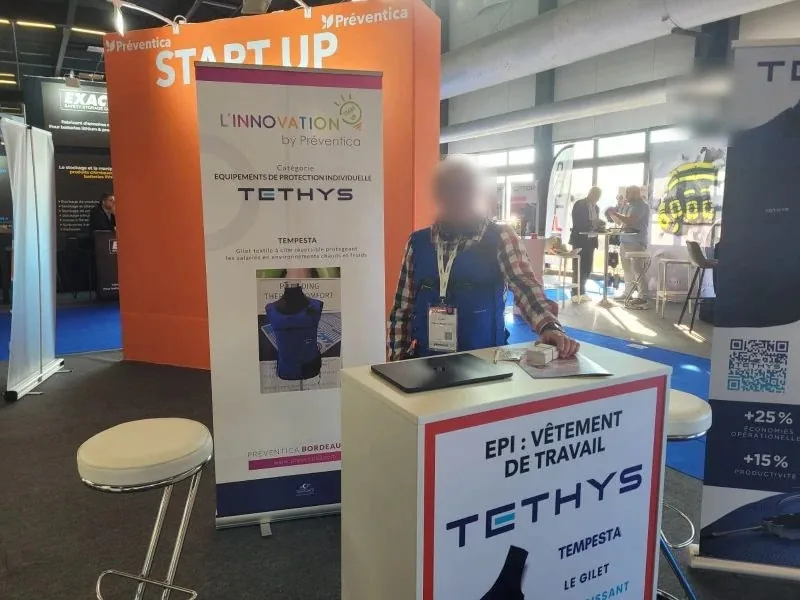
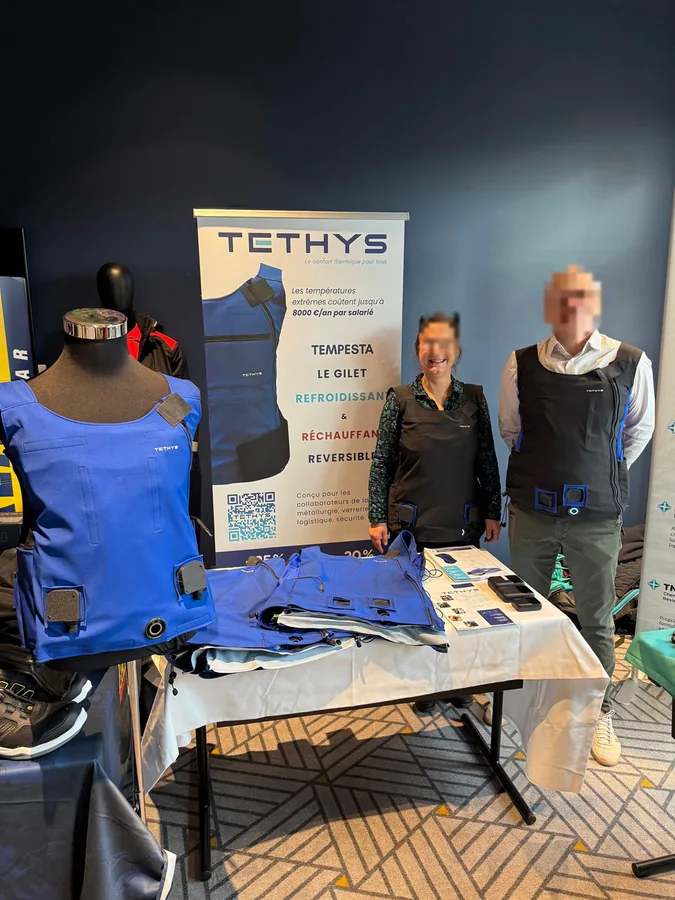
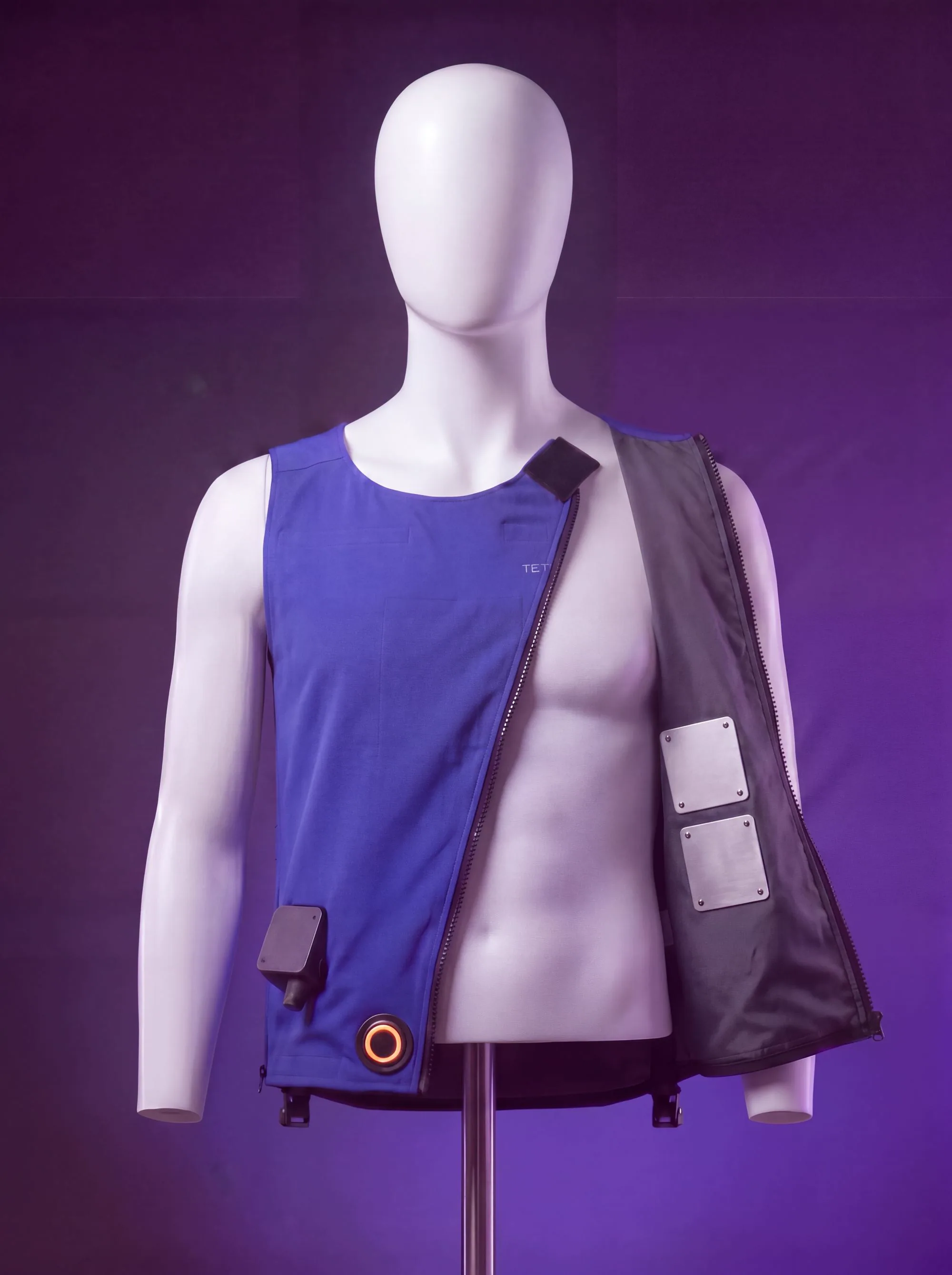
It was in this demanding setting, before a jury of HSE directors from major industrial groups, prevention engineers, and representatives of INRS, that Tethys presented its Tempesta thermal vest - and won the Prix de l'Innovation (Preventica Bordeaux 2025 Innovation Award) unanimously.
Why Tethys won over the jury
The problem is familiar to every high-heat industrial sector: steelmaking, foundries, nuclear, glassmaking, summer construction work. Workers exposed to air temperatures of 38°C to 60°C, or to the radiant heat of furnaces and blast furnaces, suffer from chronic heat fatigue, reduced productivity and, in severe cases, potentially fatal heat stroke. Existing solutions - ice vests, ventilated garments - suffer from crippling limitations: excessive weight, insufficient battery life, discomfort, ineffectiveness in radiant environments.
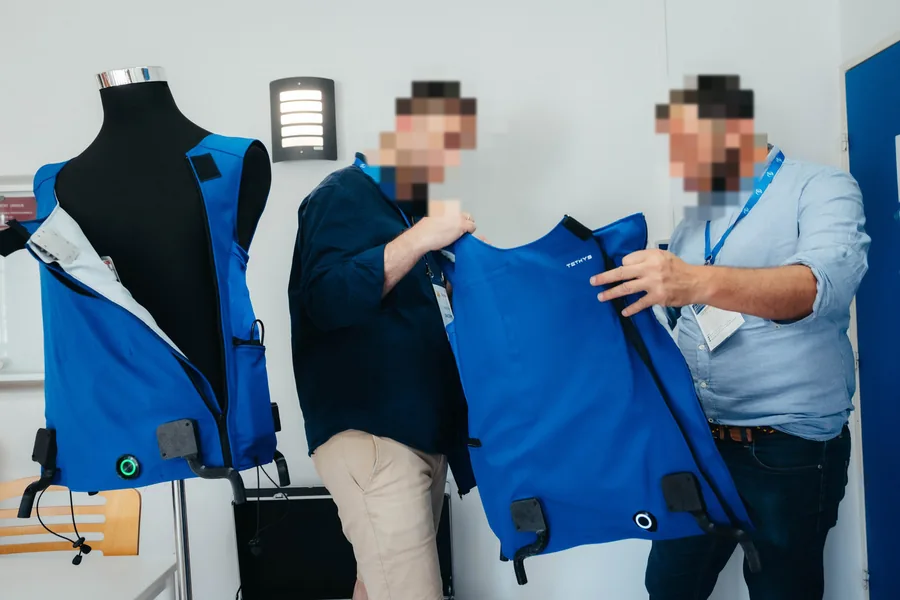
The Tempesta addresses these gaps with a radically different approach. At the heart of the vest: a microfluidic network inspired by the thermal regulation systems developed for spacesuits, coupled with thermoelectric Peltier modules. This system simultaneously delivers:
- Active cooling through the circulation of temperate water across highly vascularized zones (chest, back, neck), keeping skin temperature within the comfort range even at 50°C ambient.
- Adaptive heating during abrupt thermal transitions (leaving a furnace area, entering a cold zone), preventing the thermal shocks that cause musculoskeletal disorders.
- Battery life of 3.5 hours per charge, thanks to two hot-swap removable batteries.
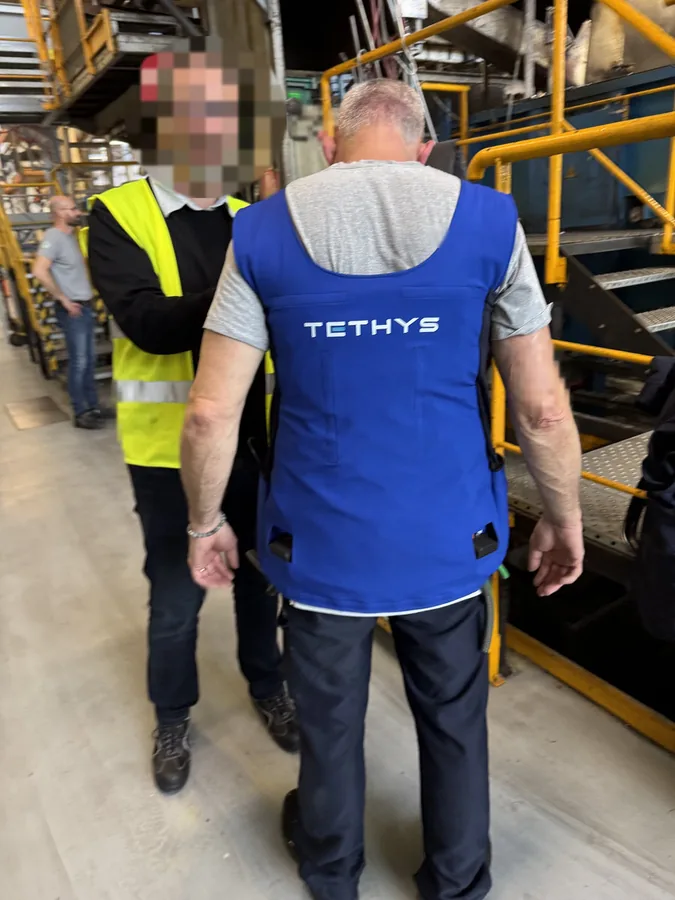
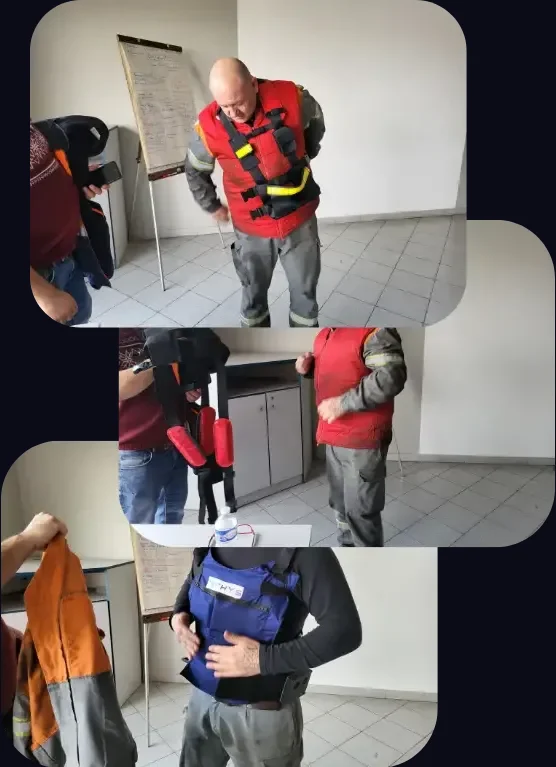
All in a 1.6 kg package, compatible with regulatory PPE (harnesses, high-visibility vests, electric arc protection).
The founder's voice
This recognition validates our approach: space technology in the service of worker comfort.
- Giacomo Saccone, CEO & Co-founder, Tethys (translated from French)Giacomo Saccone, CEO and co-founder of Tethys: "When we launched Tethys, many people told us it was too complex, too expensive, too ambitious for industry. This award proves otherwise. The industrial world is ready for smart equipment. Workers deserve the same innovations as astronauts." (translated from French)
Since its founding, Tethys's approach has been to start from the real problem - observed in the field with prevention specialists and operators - rather than trying to adapt an existing technology. This bottom-up approach, rare in the PPE sector, clearly won over the jury.
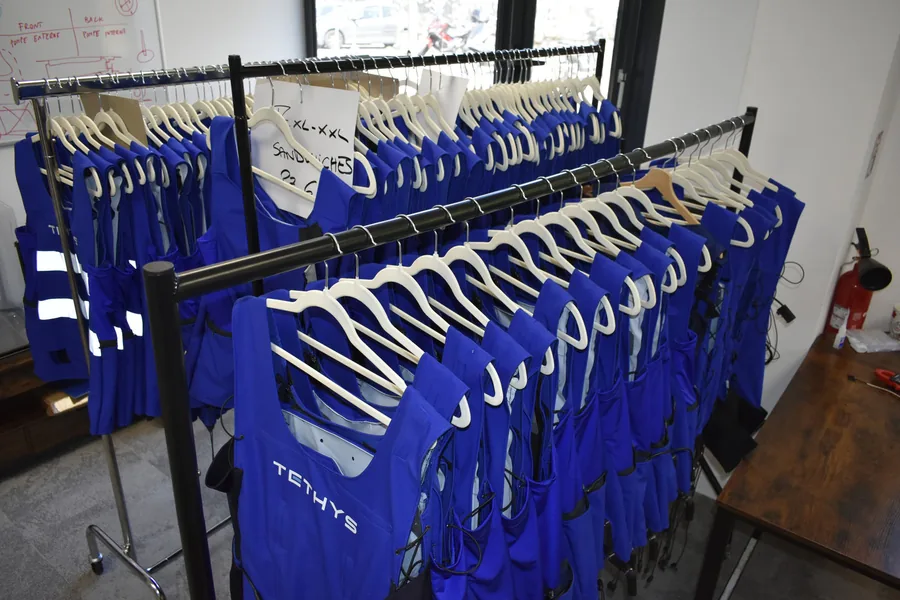
More than 35 active pilots at the time of the award
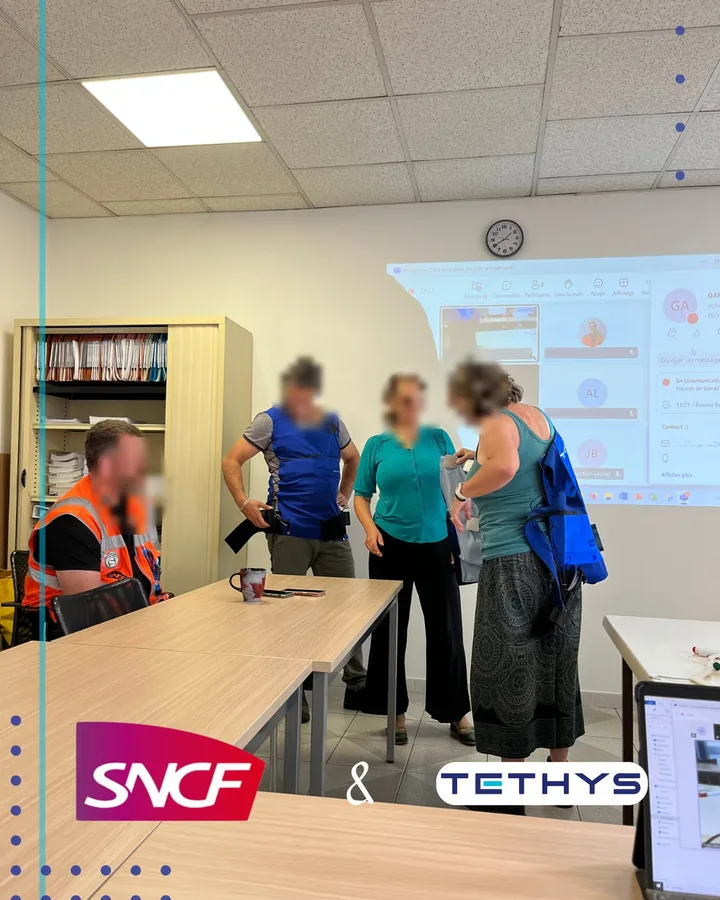
At the time of the trade show, Tethys had more than 35 active pilots at leading companies: SNCF (summer track maintenance), Eiffage (construction sites with high sun exposure), GSF Cleaning & Services (4 industrial sites including the EDF Bugey nuclear plant), and now ArcelorMittal at the Fos-sur-Mer site for blast furnace operators.
Field feedback converges: a 40 to 60% reduction in perceived heat fatigue depending on the environment, sustained alertness at the end of shifts, and - a figure rarely measured until now - fewer informal work stoppages due to heat. Alexandre Bernard, GSF Branch Manager, summed it up at the press conference: "It's no longer a gadget, it has become a piece of safety equipment in its own right." (translated from French)
What opens up now
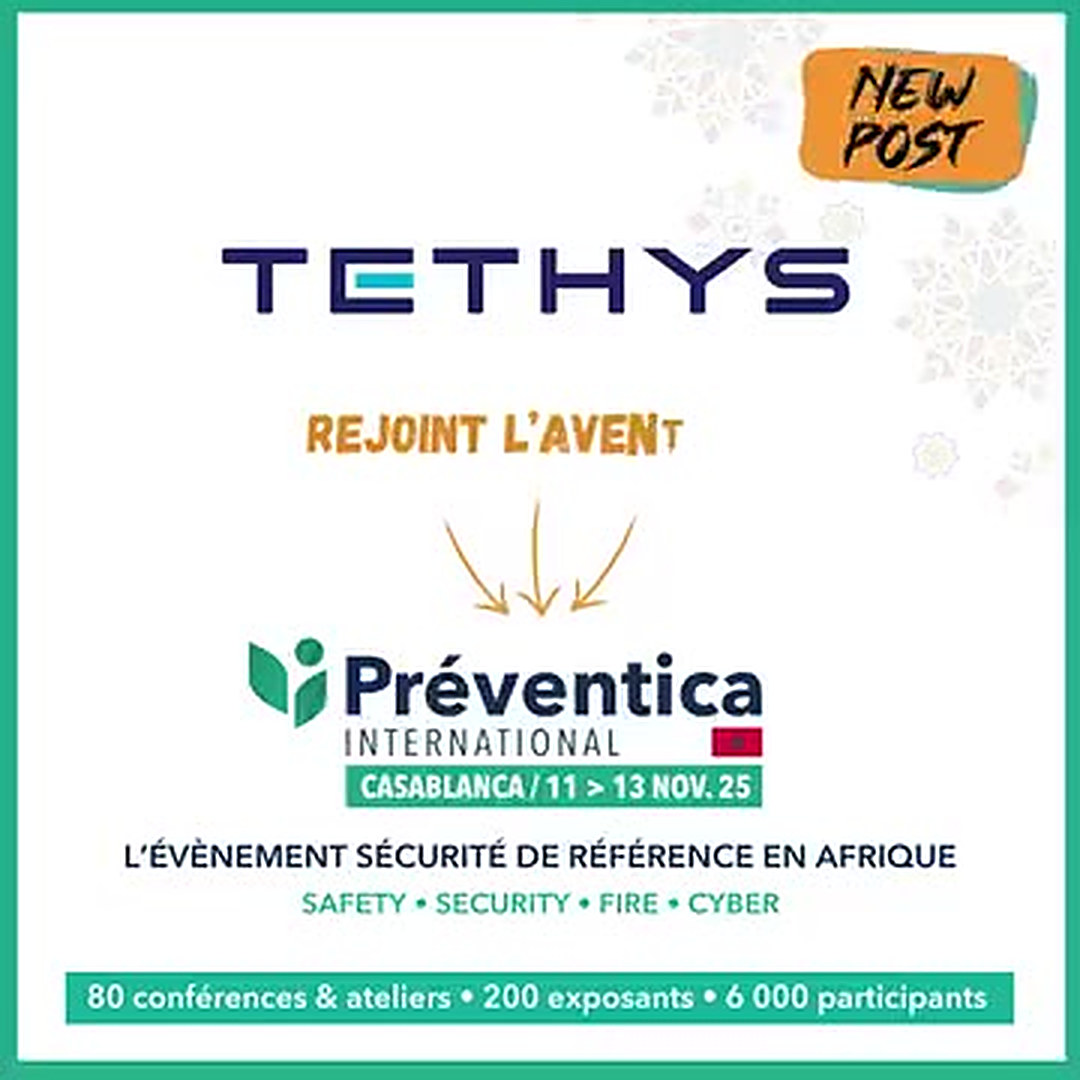
Building on this national recognition, Tethys is accelerating on two fronts. First, international expansion: its presence at the Preventica Maroc trade show in November 2025 marks its entry into the MENA region, where climate conditions make the problem even more acute. Discussions are underway with industrial partners in Saudi Arabia, the Emirates, and Morocco.
Second, sector expansion: while heavy industry remains the core target, Tethys is actively exploring the defense (soldiers in desert zones), wildland firefighting, and intensive agriculture markets. In each of these contexts, the thermal challenge is critical and current solutions fall short.